 by
by Los Angeles, California — Koreatown has become one of the most exciting culinary neighborhoods in the United States, drawing visitors from across the country who want to experience authentic Korean cuisine and culture.
Located in the heart of Los Angeles, the district is widely known for its dense concentration of restaurants, late-night dining spots and Korean cultural influences, making it a major destination for food lovers.
Today, Koreatown continues to thrive as one of the largest Korean-American communities outside South Korea.

Koreatown’s Compact and Busy Urban Neighborhood
Koreatown sits in central Los Angeles and covers about 1.8 square miles, bordered by Olympic Boulevard, Wilshire Boulevard, Western Avenue and Crenshaw Boulevard.
Despite its relatively small footprint, the neighborhood contains hundreds of restaurants and food establishments packed into a walkable area.
The district is easily accessible via the Los Angeles Metro, particularly the Purple Line stop at Wilshire/Vermont.
Because of the neighborhood’s compact design, visitors can often walk between several restaurants in one evening.

A Food Destination Known for Late-Night Dining
Koreatown has been a culinary hotspot since the 1970s.
Today, it is known for a unique dining culture where many restaurants stay open late into the night — and some operate 24 hours a day.
The neighborhood’s nonstop restaurant scene allows visitors to experience Korean cuisine at nearly any hour.
From street food stalls to traditional restaurants and modern fusion cafés, Koreatown offers an enormous range of dining options.
Korean BBQ Remains a Local Favorite
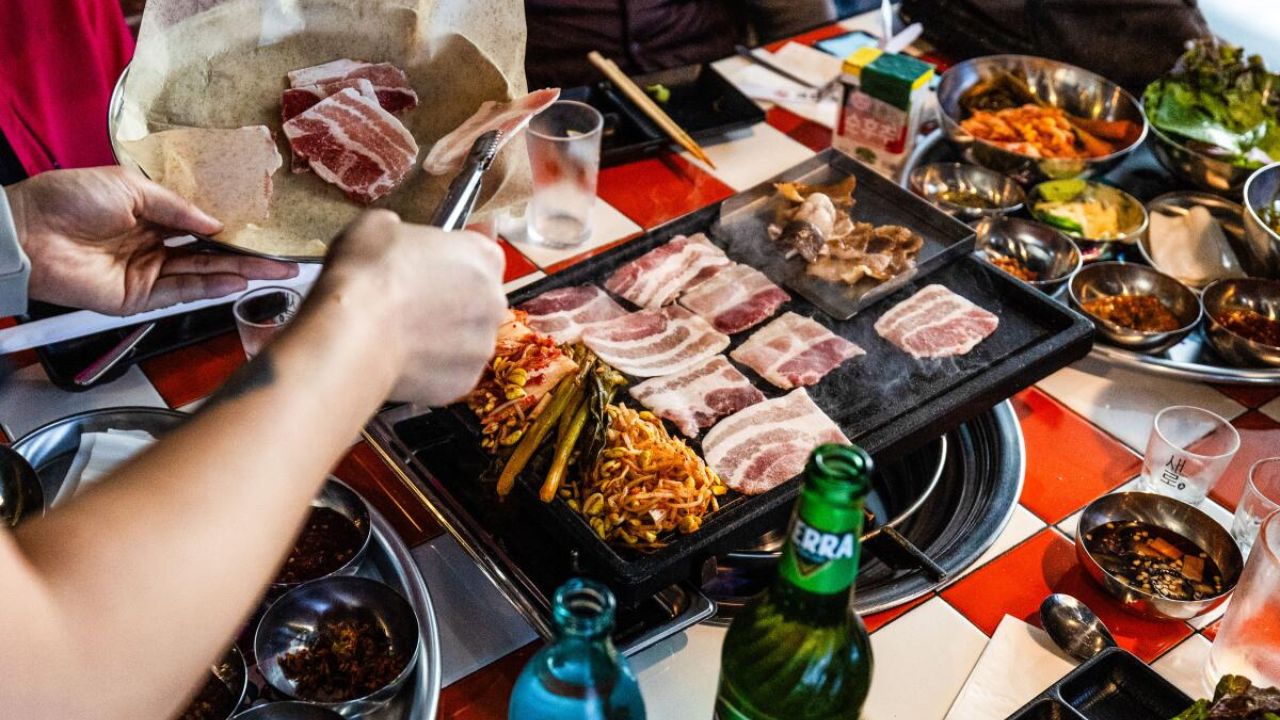
One of the most iconic dining experiences in the neighborhood is Korean barbecue.
Restaurants like Park’s BBQ are famous for dishes such as galbi short ribs served with a variety of traditional side dishes known as banchan.
Diners grill their own meat at the table, creating a lively and interactive dining experience.
The restaurant has been a favorite in the community since 2005 and remains popular with both locals and visitors.
A 24-Hour Tofu House Staple
Another well-known restaurant in the neighborhood is BCD Tofu House.
The restaurant is famous for its soon dubu jjigae, a spicy Korean soft tofu stew.
Open 24 hours a day, BCD Tofu House attracts both daytime visitors and late-night crowds.
The restaurant’s name comes from Bukchang Dong, a neighborhood in Seoul, South Korea.
Its round-the-clock schedule perfectly reflects Koreatown’s vibrant late-night dining culture.
Traditional Korean Pork Dishes at Kobawoo House
For those seeking traditional Korean flavors, Kobawoo House is known for its bossam, a dish featuring boiled pork belly served with house-made kimchi.
The restaurant has been operating in Koreatown for more than 40 years, helping preserve traditional Korean cooking methods.
Many visitors order large platters designed for sharing, emphasizing the communal style of Korean dining.
Michelin-Recognized Noodle Spot
Koreatown also features restaurants recognized for high-quality casual dining.
Hangari Kalguksu has earned a Michelin Bib Gourmand distinction for its hand-cut wheat noodles served in a flavorful anchovy broth.
Many dishes are accompanied by dongchimi, a refreshing cold radish soup that balances the richness of the main meal.
Read Also: These Alabama Seafood Spots Look Simple — But the Food Is Incredible
The restaurant is frequently busy, with long lines signaling its popularity.
Late-Night Dining and Nightlife Culture
Koreatown’s food scene does not slow down after dark.
Restaurants such as Dan Sung Sa serve diners well into the early morning hours.
Known for dishes like abalone porridge and seafood pancakes, the restaurant stays open until about 4 a.m., attracting night owls leaving nearby bars and karaoke lounges.
Some venues also feature private karaoke rooms, blending dining with entertainment.
A Neighborhood That Continues to Evolve
Today, Koreatown represents a dynamic blend of traditional Korean cooking and modern Korean-American fusion cuisine.
Longstanding restaurants operate alongside newer establishments run by younger chefs who experiment with modern flavors.
This combination has helped transform the neighborhood into one of the most diverse and exciting food districts in Los Angeles.
For visitors and locals alike, Koreatown offers a culinary experience that reflects both the rich traditions of Korean cuisine and the ever-evolving food culture of Los Angeles.
Have you ever visited Koreatown in Los Angeles? Share your favorite Korean dishes or restaurants respectfully in the comments below.