
 by
by Boston Mayor
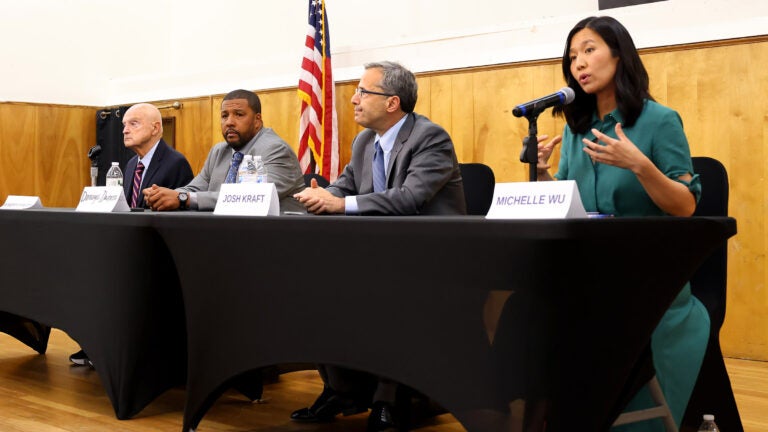
Michelle Wu
stands a solid chance of winning reelection, and is currently enjoying a large lead over her opponents, according to new polling data released Monday.

The poll
, conducted by Suffolk University and
The Boston Globe
from July 13-16, shows that 60% of respondents chose Wu as their preferred mayoral candidate.
Josh Kraft
, Wu’s main rival, was the preferred candidate of 30% of respondents.

Wu also has a 66% favorability rating, and 65% of respondents said that they approved of the job she has done as mayor.
The good news for the Wu campaign comes a little more than a month away from when the first ballots will be cast in the mayoral race. The city’s preliminary election is set for Sept. 9, and
early voting
begins Aug. 30. The preliminary election is meant to whittle down the race to two candidates ahead of the general election in November.
“Josh didn’t get into the Mayor’s race because of what polling says, and nothing has changed his focus on continuing to show up in Boston neighborhoods, talk to residents, and listen to the concerns of many people who are disappointed with this Mayor and the direction the city is going,” a spokesperson for the Kraft campaign said in a statement. “The entire campaign team is confident that as residents learn more about Josh, his background of service, and his ideas for the future of Boston, the numbers will move in his direction. And the only numbers that count in the end are votes.”

Wu and Kraft will be joined on the ballot by longtime community activist
Domingos DaRosa
and
Robert Cappucci
, a retired Boston police officer and former elected member of the Boston School Committee. DaRosa is polling at 3% and Cappucci at 1%. About 7% of voters still remain undecided, according to the Suffolk/
Globe
poll.
Unseating
an elected incumbent mayor is extraordinarily difficult in Boston. Kraft, a longtime philanthropist with plenty of name recognition and connections to the city’s elite, is
outraising Wu
so far. He has raised about $3.2 million, compared to Wu’s $1.3 million.
Kraft has sought to
differentiate himself
from Wu by
attacking her
on topics like the costly redevelopment of White Stadium, public safety, the contentious installation of bike lanes, and housing construction.
Housing is the most important issue to voters, with 26% of respondents to the recent poll listing it as the issue that will most affect their vote. About 17% of respondents said that the economy and jobs were most important, 13% listed the local response to President Donald Trump, and 12.6% listed education.
“Mayor Wu is in a strong position for re-election as we look toward the September preliminary,” David Paleologos, director of the Suffolk University Political Research Center, said in a statement. “This poll also gives us some important insights into where her main challenger, Kraft, is edging her among certain sections of the electorate.”
While Wu edged out Kraft in almost every demographic in Boston, Kraft has a considerable lead among households that have a family member who works in public safety, and among self-described conservatives. Both Kraft and Wu are Democrats, and the mayoral election is formally nonpartisan.
Kraft has struggled to make up ground over the past few months. In February,
polling from Emerson College
found that 43% of voters favored Wu, compared to 29% backing Kraft. In April, a
Saint Anselm College poll
found that 53% of voters would support Wu to Kraft’s 21%.
Ross Cristantiello, a general assignment news reporter for Boston.com since 2022, covers local politics, crime, the environment, and more.
Sign up for the Today newsletter
Get everything you need to know to start your day, delivered right to your inbox every morning.