 by
by Arizona’s history is filled with stories of resilience and resistance, but none stand out more than the legacy of the Apache warriors. Known for their fierce combat tactics, unmatched survival skills, and unwavering determination to protect their land, the Apache were considered one of the most dangerous and formidable Native American tribes in U.S. history.
For centuries, they resisted domination—first by Spanish colonizers, then Mexican authorities, and finally the United States military. Their influence shaped the course of the American Southwest like few others.
The Apache Warrior Culture
- The Apache were not a single tribe but a group of closely related peoples, including the Chiricahua, Mescalero, and Western Apache.
- They lived across Arizona, New Mexico, and Texas, thriving in the region’s rugged deserts and mountain ranges.
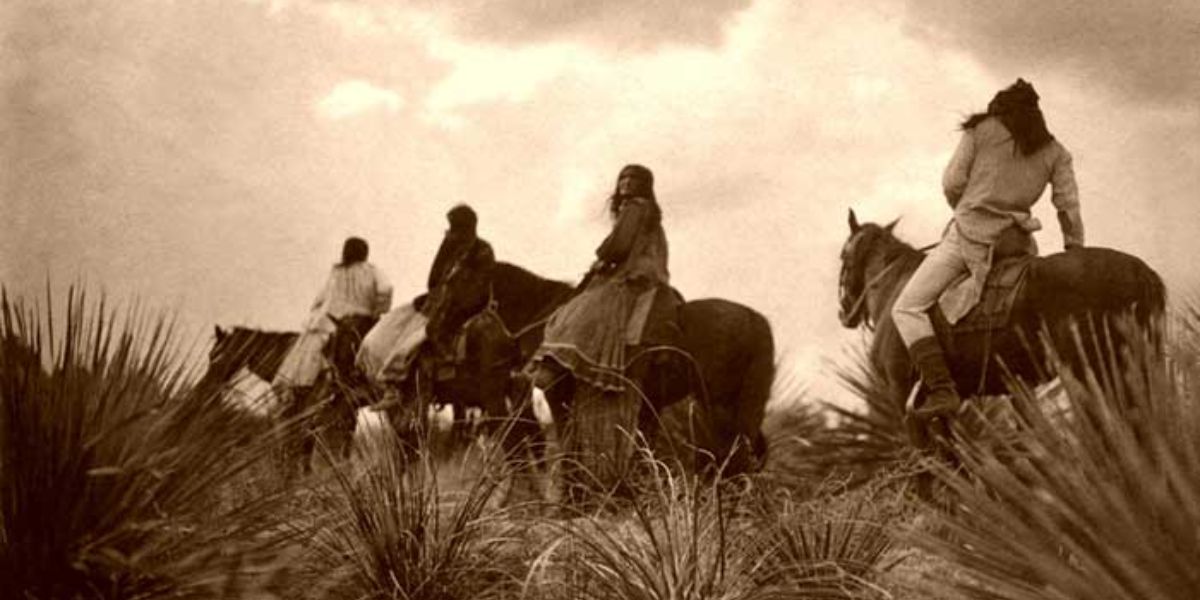
- Apache boys were trained from childhood to become warriors, mastering skills like stealth, tracking, horsemanship, and guerrilla warfare.
- Their preferred tactic was the hit-and-run raid, which allowed them to strike quickly and vanish into the landscape before retaliation could be organized.
Clashes with Spanish and Mexican Forces
- Apache resistance began as early as the 1500s, when they first encountered Spanish explorers and missionaries.
- The Spanish established missions and settlements, prompting Apache raids for horses, weapons, and supplies.
- After Mexico’s independence in 1821, the conflict escalated. The Mexican government placed bounties on Apache scalps, a brutal policy that intensified the violence on both sides.
The Apache Wars with the United States
- When the U.S. acquired Arizona after the Mexican-American War (1846–1848), American settlers became targets of continued Apache raids.
- This led to the Apache Wars (1849–1886)—a series of conflicts between the U.S. Army and various Apache groups. It became one of the longest and most difficult campaigns the military ever faced.
- Legendary Apache leaders emerged during this time:
- Cochise, who led years of attacks on soldiers and settlers, using diplomacy and warfare to defend his people.
- Geronimo, who carried out daring raids and evaded capture despite being heavily outnumbered and pursued across thousands of miles.
Key Battle: The Battle of Apache Pass (1862)
- One of the most notable confrontations occurred at Apache Pass, where Apache warriors used the mountainous terrain to ambush Union soldiers.
- Despite the Army’s superior weaponry, the Apache’s use of natural geography and surprise attacks made the battle exceptionally difficult.
The Fall of the Apache Resistance
- The U.S. military adopted harsh tactics, including cutting off food supplies, forcing Apache surrender.
- Apache scouts, often from rival tribes or former warriors, were used to track down remaining bands.
- In 1886, Geronimo’s final surrender to General Nelson Miles marked the end of the Apache Wars.
- Surviving Apache were forced onto reservations, and their nomadic warrior lifestyle came to a close.
The Apache Legacy
- Though their era of armed resistance has ended, the Apache Nation continues to thrive, preserving language, traditions, and history.
- Their story is a powerful reminder of the complexity and endurance of Indigenous peoples in the face of colonization and conflict.
- Today, they are remembered not just as warriors, but as skilled tacticians, survivalists, and defenders of their land and culture.
Conclusion
The Apache remain an enduring symbol of strength in the American Southwest. Their ability to hold off multiple governments for centuries made them one of the most feared and respected Native American tribes in history. In Arizona, their legacy lives on—not in war, but in pride, culture, and community.