
 by
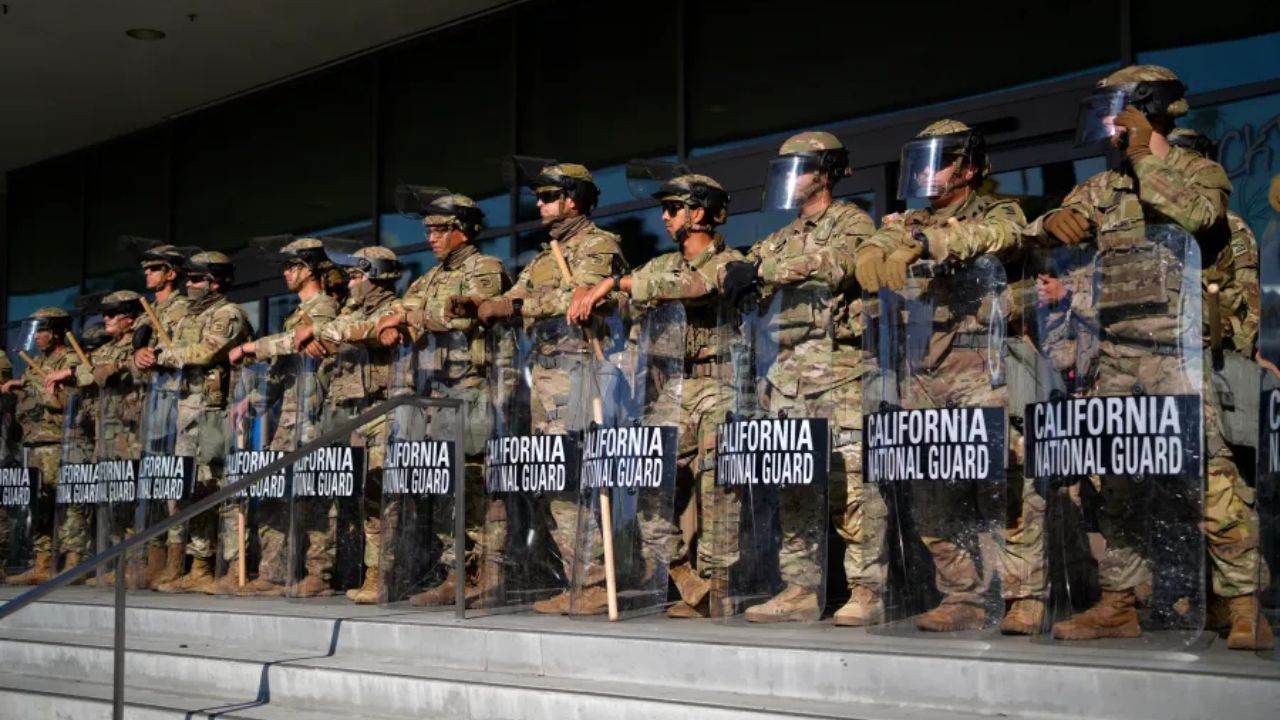
by Sacramento, CA – California Governor Gavin Newsom is seeking to regain control over the remaining California National Guard troops after a federal judge ruled in his favor earlier this week.
On Tuesday, U.S. District Court Judge Charles Breyer determined that former President Donald Trump violated the Posse Comitatus Act of 1878 by deploying members of the California National Guard and Marines for law enforcement purposes in June during protests in Los Angeles related to immigration raids and arrests.
While the ruling barred the federal government from using the military to enforce laws in California, Governor Newsom announced that he is taking the issue further. On the same day, he filed a preliminary injunction to prevent the federal deployment of the remaining 300 National Guard members through the November 4 general election.

Details of the Injunction
The injunction was filed in the U.S. District Court for the Northern District of California, with the same defendants as the earlier case: Donald Trump, Defense Secretary Pete Hegseth, and the Department of Defense. Submissions were made by Attorney General Rob Bonta and his legal team.
The motion seeks to overturn the federal order issued on August 5, which federalized and deployed 300 California National Guard members for 90 days, and restore full control of the California National Guard to the state. According to court filings, the federal deployment amounts to a military occupation, extending through a statewide election that includes Proposition 50 on congressional redistricting.
Political Context
Democratic supermajorities in the California Assembly and Senate passed the measure placing Proposition 50 on the November 4 ballot, which, if approved, could cost Republicans five U.S. House seats. Newsom and other Democrats argue the measure counters mid-decade redistricting in Texas, which they say benefits Trump and the Republican Party.
The preliminary injunction argues that Trump, Hegseth, and the Department of Defense cannot demonstrate evidence of an invasion, rebellion, or inability to enforce federal law anywhere in California as of August 5.

Newsom’s Statement
Governor Newsom criticized the federal deployment, saying:
“The timing of Trump’s extension of the National Guard soldiers isn’t coincidental – he’s holding onto soldiers through Election Day. There was never a need, and there is not a need now for soldiers to be deployed against their communities. The federal government hasn’t even tried to justify keeping the military in Los Angeles because they can’t. The reality is this – they want to continue their intimidation tactics to scare Californians into submission.”
Legal and Public Implications
The case highlights tensions between state and federal authority over the National Guard and raises concerns about the use of military forces in domestic settings. Legal experts note that the outcome could set a precedent for how the Posse Comitatus Act is applied in other states during politically sensitive periods.
As the court considers Newsom’s injunction, Californians will watch closely to see whether the remaining 300 National Guard troops will be returned to state control before the upcoming general election.
Do you think the federal government should have the authority to deploy the National Guard in states during protests, or should control remain entirely with the governor? Share your opinion in the comments below.