
 by
by
Editor’s note: Made in Tarrant is an occasional Q&A series on small businesses started in Tarrant County. Submit your business
here
.

Texas Christian University sophomore Bobby Deftos started small when he started coaching basketball in his Chicago suburb.
It began with one kid whose mom saw Deftos shooting hoops at a varsity high school game. He was just a junior. Over the following summers, it grew to around 25 families. From one-on-one coaching, he moved to mini clinics and kid camps.
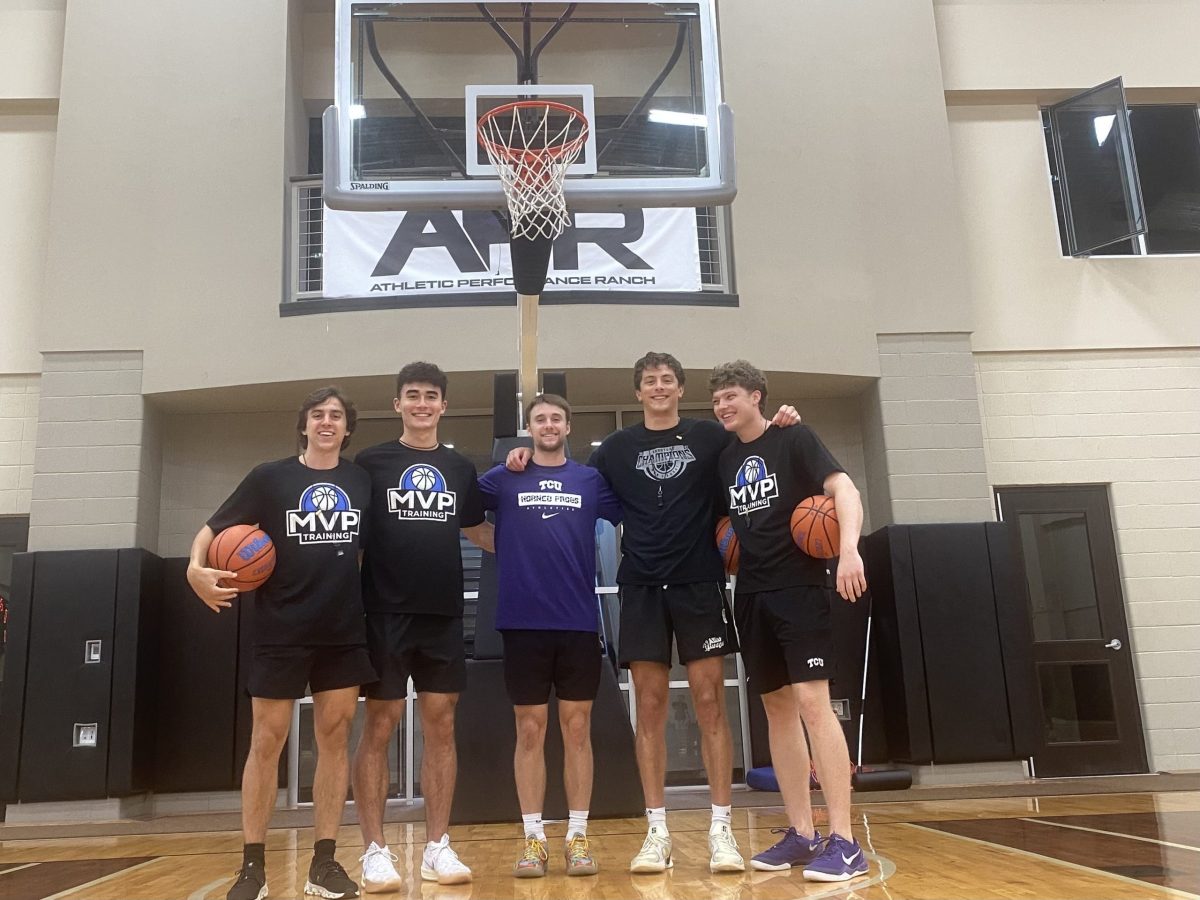
When he came to TCU, he decided to run with his idea even more. He paired up with TCU classmate
Dylan Lafferty, and in the fall they launched MVP Training.
This summer they started marketing the Brock Harding Basketball Camp, a six-hour one day camp with TCU basketball point guard Harding.

In June, they began
a 40-day Instagram campaign
with zero campers and no venue. By day 40, the day of the camp, they had over 50 players, boys aged 8 to 13 years old, and a venue, Fort Worth’s AP Ranch.
ENJOY READING THE NEWS AGAIN
Discover
refreshing, nonpartisan
reporting on stories happening in your backyard.

Deftos talked to the Report’s Shomial Ahmad on his approach to basketball camp, how he’s leveraged the Big 12 university’s resources and what his little league basketball team would be known for.
The interview has been edited for clarity and space.
Contact information:
Instagram
: _mvptraining_
Phone:
630-408-7402
Email:
[email protected]
Shomial Ahmad:
How do you set yourself apart from other basketball camps?
Bobby Deftos:
The most important thing is providing quality training. I have a ton of confidence in our ability to help kids grow, not only as players, but as people. A lot of other trainers are more focused on the actual X’s and O’s and those types of things. We really focus on teaching attitude, effort and respect. When the kids leave, the parents see a real change in the kids.
That’s what ends up building great athletes down the road. Having a great attitude leads to practicing and playing incredibly hard. A lot of people look at playing hard as an intangible, but it truly is a skill that needs to be worked on and developed — and it’s vital that it gets developed at a young age.
It started as a great way to make spending money, but it grew to be more than that. You also see these kids develop. You get a message, “My son made the team. I’m so happy. He’s so stoked. Thank you so much.” You get a video of a kid playing on the A team. Or you get a text from a parent, that says, “Hey, AJ just cleaned up the dinner table at night.”
Those are the moments when I decided to really run with it and let it take off.
Ahmad:
How did you leverage the resources that you had at TCU to make your camp successful?
Deftos:
I’m a student manager on the TCU men’s basketball team. I’ve been lucky to tap into the knowledge and expertise. I like to think of myself as pretty intelligent and focused on basketball, but I’m 19 and just finished my first year at TCU.
I can walk into coach Tony Benford’s and coach Duane Broussard’s offices and pick their brains as people who have been working in Division I basketball for decades.
I can call my boss who has run TCU kids camps for 10 years now, and ask, “Like, how do I do this?” He tells me a couple of ways to get a tax break, how to keep kids entertained after lunch, how to make myself a better coach and how to train the kids better.
Ahmad:
What’s your goal with the camp?
Deftos:
Our goal is to learn. I mean, it’ll be good to make a couple of bucks and all that good stuff. But we want to grow as people, as entrepreneurs and as basketball minds.
We walked into 65 different stores and pitched sponsorships. I walked into the first one and was shaking just from being nervous, and when I walked into the 30th one, I sold a sponsorship. That kind of personal growth — overcoming social anxiety and learning how to pitch people — doesn’t happen if you’re sitting behind a desk working an internship for some random company.
Ahmad:
What are some key lessons that you learned along the way since starting the camp?
Deftos:
The first one is pretty obvious, but it’s to leverage your connections as much as possible. Our camp space, some of the ways we advertise or market our sponsorship came from, “Hey I know this guy, or I know a guy who knows a guy.”
The same goes the other way. Because we’ve helped out a couple of people in our field who are trainers, now maybe we can use their gym space. It becomes a community because that’s what sports really is at the end of the day: a community of people who have the same goal. Get better at the game, have fun and play.
And then there’s the importance of social media. In our 40-day Instagram marketing series, we grew like 620% to 700% with over 125,000 profile views now. That success takes time, effort and focus. It’s hard to pump out that much content but we get it done.
Then it’s just living the entrepreneurial lifestyle. Everything we’re doing is dependent on us. If something has to get done, we do it. There’s no mom and dad looking over our shoulders here.
Ahmad:
If your basketball camp players formed a Fort Worth little league basketball team what would it be called and what would they be known for?
Deftos:
They would be called the Fort Worth Toads. They would be known for playing so hard, giving the best attitude, effort and respect every single day.
The Toads would end the game, shaking hands with the other team’s players, thanking the officials and running off the court.
Shomial Ahmad is a higher education reporter for the Fort Worth Report, in partnership with
Open Campus
. Contact her at
.
At the Fort Worth Report, news decisions are made independently of our board members and financial supporters. Read more about our editorial independence policy
here
.
Tired of shouting? Help us bring facts into focus.
There’s no shortage of opinions out there, but facts are harder to come by. At the Fort Worth Report, we deliver local reporting grounded in truth so that you can make informed decisions for yourself and your community.
Related
Fort Worth Report is
certified by the Journalism Trust Initiative
for adhering to standards for ethical journalism
.

Republishing is free for noncommercial entities. Commercial entities are prohibited without a licensing agreement. Contact us for details.
Republish this article
This work is licensed under a
Creative Commons Attribution-NoDerivatives 4.0 International License
.
- Look for the “Republish This Story” button underneath each story. To republish online, simply click the button, copy the html code and paste into your Content Management System (CMS). Do not copy stories straight from the front-end of our web-site.
-
You are required to follow the guidelines and use the republication tool when you share our content. The republication tool generates the appropriate html code.
-
You are required to add this language at the top of every republished story, including a link to the story.
This story was originally published by the Fort Worth Report. You may read
the original version here
.
- You can’t edit our stories, except to reflect relative changes in time, location and editorial style.
- You can’t sell or syndicate our stories.
- Any web site our stories appear on must include a contact for your organization.
-
If you use our stories in any other medium — for example, newsletters or other email campaigns — you must make it clear that the stories are from the Fort Worth Report. In all emails, link directly to the story at fortworthreport.org and not to your website.
-
If you share our stories on social media, please tag us in your posts using
@FortWorthReport
on Facebook and
@FortWorthReport
on Twitter.
-
You have to credit Fort Worth Report. Please use “Author Name, Fort Worth Report” in the byline. If you’re not able to add the byline, please include a line at the top of the story that reads: “This story was originally published by Fort Worth Report” and include our website,
fortworthreport.org
. - You can’t edit our stories, except to reflect relative changes in time, location and editorial style.
- Our stories may appear on pages with ads, but not ads specifically sold against our stories.
- You can’t sell or syndicate our stories.
- You can only publish select stories individually — not as a collection.
- Any web site our stories appear on must include a contact for your organization.
-
If you share our stories on social media, please tag us in your posts using
@FortWorthReport
on Facebook and
@FortWorthReport
on Twitter.