
 by
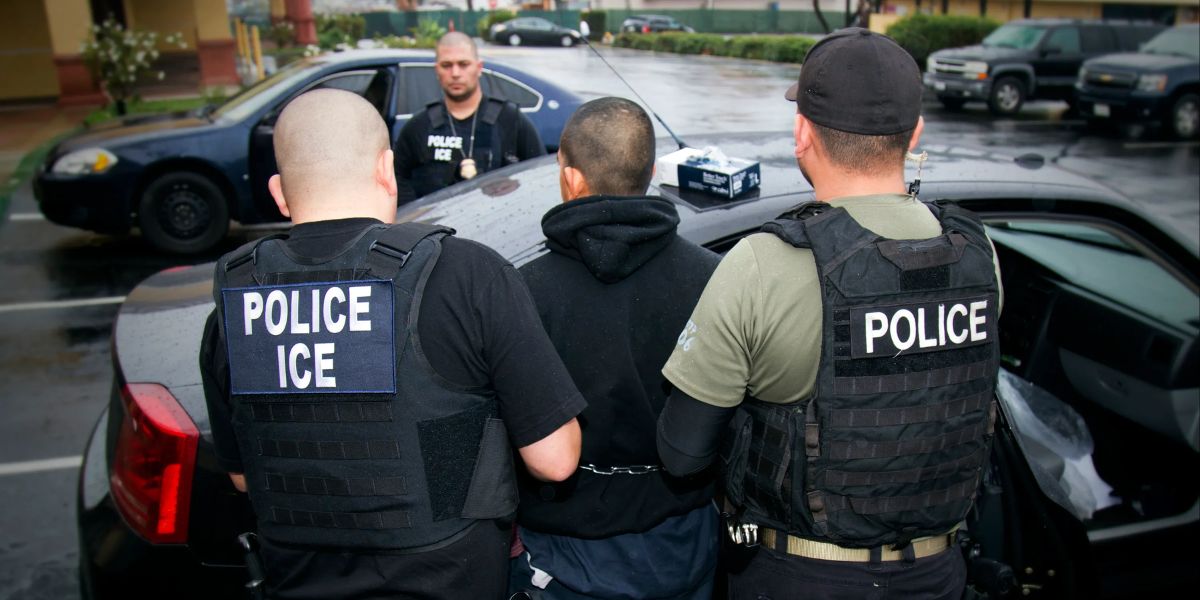
by In a major legal development, U.S. Immigration and Customs Enforcement (ICE) officers in Southern California will no longer be allowed to misrepresent themselves as local law enforcement or use deceptive tactics during home arrests. The change comes after a class action lawsuit settlement was approved Monday by U.S. District Court Judge Otis D. Wright II in the case of Kidd v. Noem.
Background of the Case
- The lawsuit was filed in 2020 by Osny Sorto-Vazquez Kidd, along with immigrant rights organizations CHIRLA (Coalition for Humane Immigrant Rights) and the Inland Coalition for Immigrant Justice.
- Plaintiffs challenged ICE’s home arrest practices in Los Angeles and surrounding counties, citing violations of constitutional rights.
- The case was supported by the ACLU Foundation of Southern California and the UC Irvine School of Law Immigrant and Racial Justice Solidarity Clinic.
Key Provisions of the Settlement
- Deceptive Tactics Banned: ICE officers in the Los Angeles Field Office may no longer:
- Pretend to be local police
- Claim to be conducting criminal investigations or probation checks (unless true)
- Use pretexts like car trouble to lure individuals outside
- Uniform Identification Requirements:
- When wearing uniforms that display “POLICE,” officers must also clearly display identifiers labeling them as “ICE” to prevent confusion.
Geographic Scope
- The agreement covers ICE’s Los Angeles Field Office, which includes:
- Los Angeles County
- Orange County
- San Bernardino County
- Riverside County
- Ventura County
- Santa Barbara County
- San Luis Obispo County
Oversight and Training
- ICE must implement new training protocols and send broadcast notifications to officers about the policy changes.
- Officers will be required to document details of home arrests, and those records must be shared with class counsel for compliance review.
- Oversight of these policies will remain in place for three years.
Statements From Advocates and Legal Counsel
- Diana Sanchez, staff attorney at the ACLU SoCal: “This settlement makes clear immigration officers are not above the Constitution and will be held accountable for their deceptive practices.”
- Annie Lai, director at UC Irvine’s Immigrant and Racial Justice Solidarity Clinic: “ICE must now be transparent about who they are if they don’t have a warrant and want to speak with someone at their home.”
- Angelica Salas, CHIRLA Executive Director: “This settlement protects all occupants and creates a safer community.”
- Lizbeth Abeln, Deputy Director at the Inland Coalition for Immigrant Justice: “ICE can no longer use deception to target our communities.”
- Giovanni Saarman González, partner at Munger, Tolles & Olson LLP: “The settlement, combined with earlier rulings, brings meaningful relief to the broader Southern California community.”
Related Court Ruling
- In May 2024, a federal court ruled that ICE and Homeland Security Investigations (HSI) officers may not enter private areas around homes (known as the curtilage) without a judicial warrant or consent if they intend to make a warrantless arrest.
Impact
Together, the settlement and prior ruling mark a significant limitation on ICE’s authority to conduct home arrests without court approval. They also represent a legal victory for immigrant communities in Southern California, reinforcing constitutional protections against deceptive law enforcement practices.