 by
by Greater Boston is seeing a boom in worker-owned coffee shops that prioritize the community, provide equitable compensation to baristas and waiters, and share ownership.
Employees in a cooperative model receive the same pay and have the opportunity to purchase stock in the company, giving them an equal say in leadership and decision-making. It also entails referring clients to nearby worker-owned companies and sister cooperatives.
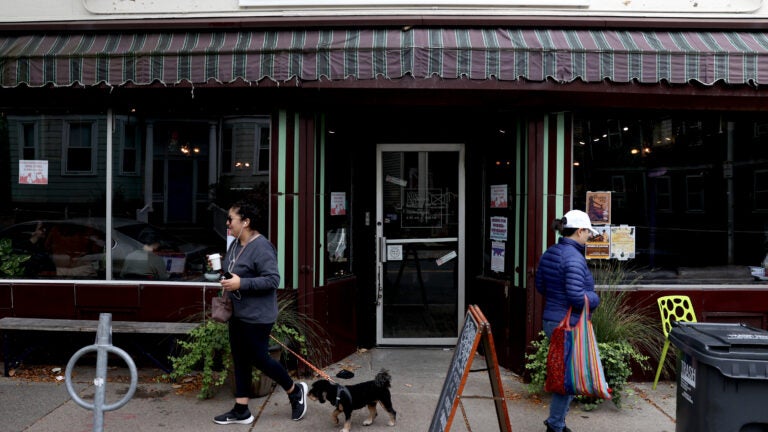
The three worker-owned cooperative cafes in Greater Boston—Circus Cooperative Cafe in Cambridge, New Leaf Espresso in Somerville, and Café Reynard in Malden—run as sister companies. Although the three are independent businesses, they share employees, trade goods, and offer advice on how to run their businesses more effectively.

Cafe Reynard is a trans-owned, unionized cooperative cafe in Malden that is well-known for its home-roasted, single-source pour-over coffee. Three worker-owners and two additional baristas work at the cafe, which launched in February. After six months, the baristas will be entitled to purchase a stake in the company.
Roxy Martinez-Dobbs, the creator and worker-owner, pays her employees $20 per hour and decided on the cooperative model since it is the most equitable and democratic method to manage a firm.
According to worker-owner Athena Jacobowitz Teatum, unlike standard corporate structures, operating a coop does not transfer funds to a single individual at the top of a power pyramid.

According to worker-owner and treasurer Rebecca Rosshauer, it’s especially effective for cafés since it’s a kind of community-based approach to business management.
According to Teatum, the success of our business depends on whether or not everyone is content and earning a livable income.
Teatum claims that worker-owners wanted to change the corporate structure and make it more equitable because they saw the current one wasn’t functioning.
In December, New Leaf Espresso launched inside Razors Barbershop. Customers can get coffee to go from the takeout window or stay for an Italian coffee, shave, or both at the espresso bar.
As part of their five-year plan, owner-workers Andrew DeBenedictus and Eoin Jaquith, who started working together at 1369 Coffee House in Cambridge, talked about starting their own coffee shop last August. But when Razors’ espresso bar space became up in October, the two seized the opportunity.

“It didn’t really make sense to impose hierarchy on a crew of six employees who currently earn $16 per hour,” said Jaquith, who had always liked the cooperative model.
Since none of their employees have shown any interest in recording their commitment to the company on paper, New Leaf does not currently have a plan to become worker-owned.
Thanks to Cafe Reynard’s affiliation, the Somerville cafe provides Hoodsie cup affogatos, some of its roasted coffee blends, and Lionheart Confections pastries, and also hosts live music every Sunday.
With four worker-owners who had previously worked for Darwin’s coffee business, Circus moved into the old Darwin’s café on Putnam Avenue in Cambridge in September 2023.
According to The Boston Globe, Darwin’s announced the closure of its final three cafes in late 2022 after its employees, like many other Boston coffee shop employees, attempted to form a union.
Adopting the cooperative model, Circus provides free books, zines, masks, and COVID tests to cafe patrons, pays employees $1 more than the minimum wage, and serves coffee from Equal Exchange, another cooperative company.
The creation of these cooperative cafés coincides with the struggle for unionization of many cafes in Greater Boston, as demonstrated by Darwin’s.
The 20th Starbucks location in the state and all seven Blank Street Coffee locations in Boston chose to unionize in June.Due to failed contract negotiations, Blue Bottle Coffee closed five of its six outlets in Massachusetts in May after a walkout.
According to Jaquith, the majority of a coffee shop’s operations are carried out by the rank and file employees, but management plays a part in a conventional café. After mastering all of these abilities, you think, “Perhaps I could do this myself.”
According to Martinez-Dobbs, there is a general desire for anything that benefits employees more. Because of the constant need for the product and the resulting decreased risk of entering the coffee industry, the cooperative model is popular among coffee entrepreneurs.
According to Jaquith, New Leaf instituted a guideline under the worker-owned model that states there are no authoritative positions, only subject-matter specialists that other employees can consult for guidance and assistance.
According to Rosshauer, cafes are increasingly adopting the cooperative model since they are frequently already community-focused enterprises with an ethical bent and a need for fair-trade coffee sources.
Sign up for The Dish
Get the most recent news on food and beverages from Boston.com.