
 by
by North Texas has avoided drought conditions so far thanks to above average rainfall.
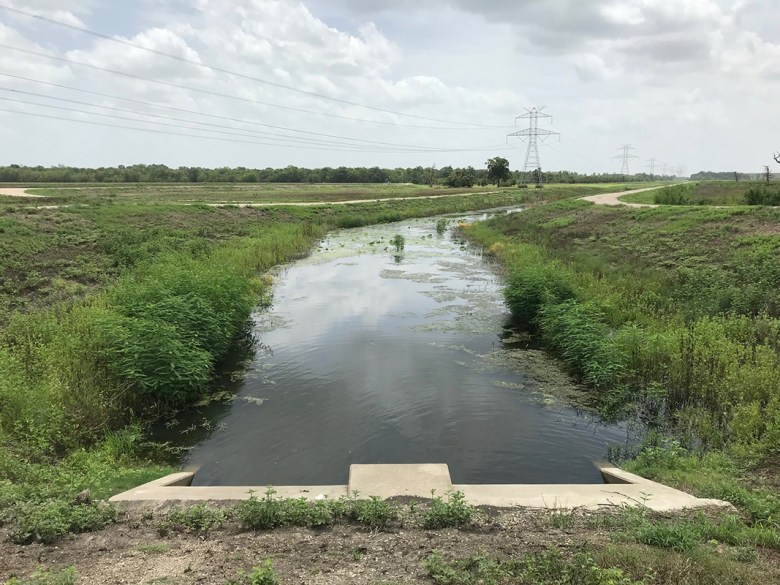
From June 14 to July 14, Tarrant Regional Water District lakes and other waterways received enough rainfall to fill each of the agency’s water storage areas to at least 95% capacity, according to data presented in a July 15 board meeting.
Rainfall maxed out Benbrook Lake’s watershed capacity by 150% during that period, while the Richland Chambers watershed capacity was at 152%.

The remaining watersheds collected normal amounts of rain to completely fill their watersheds, the data shows.
The rainfall helped the district in securing additional water resources after North Texas experienced abnormal drought conditions in early April, just before heavy spring rains hit the region, said water resources engineering director Zach Huff.
ENJOY READING THE NEWS AGAIN
Discover
refreshing, nonpartisan
reporting on stories happening in your backyard.

Drought
and above-average temperatures across the country are most prominent from June through August, according to the National Integrated Drought Information System. The National Weather Service forecasts above-average temperatures with average rainfall for North Texas from July 21 to July 27.
Benbrook Lake is currently a foot above its conservation level, which allowed the district to pump and supply more water, Huff said.
The last time the water district’s water storage system was completely full was July 2021. At this time in 2022, the system was 86% full, Huff said.
“This is the point where we savor it because it won’t last long,” said Huff.

While higher than the annual average, the rainfall does not pose a risk or concern for flooding, Huff said.
The recent
deadly flooding in Central Texas
attests to the importance of the water district’s mission to maintain and provide flood control, Huff said.
“Reflecting on that really emphasizes … how vigilant we need to stay and how important it is to be proactive with projects like (the Central City flood control project),” Huff said.
Central Texas experienced a 1,000-year flood event, a natural disaster with the chance to occur once every 1,000 years, Huff said.
“It was a tremendous event that is just truly devastating,” he said.
North Texas has not experienced a 1,000-year flood event since October 2015, when Navarro and Hill counties saw
20 inches of rain
. The rainwater flooded roads and pushed water into lakes including the Richland Chambers Reservoir.
While not nearly as catastrophic, Lake Bridgeport experienced a 10-year flood April 30, an event with a chance to occur once every decade, Huff said. The rain fell on the highest basin of the lake, providing the water district enough time to respond if an emergency had occurred.
“A big part of a flood is not just where or how much rain hits, it’s where the rain hits and the geography,” said Huff. “The situation can change very fast.”
The public can refer to the water district’s
OneRain website
to assess rain and flooding forecasts. The website provides data reflecting 24-hour rain gauges, lake levels and how waterways are reacting to rainfall.
Nicole Lopez is the environment reporter for the Fort Worth Report. Contact her at
.
At the Fort Worth Report, news decisions are made independently of our board members and financial supporters. Read more about our editorial independence policy
here
.
Tired of shouting? Help us bring facts into focus.
There’s no shortage of opinions out there, but facts are harder to come by. At the Fort Worth Report, we deliver local reporting grounded in truth so that you can make informed decisions for yourself and your community.
Related
Fort Worth Report is
certified by the Journalism Trust Initiative
for adhering to standards for ethical journalism
.

Republishing is free for noncommercial entities. Commercial entities are prohibited without a licensing agreement. Contact us for details.
Republish this article
This work is licensed under a
Creative Commons Attribution-NoDerivatives 4.0 International License
.
- Look for the “Republish This Story” button underneath each story. To republish online, simply click the button, copy the html code and paste into your Content Management System (CMS). Do not copy stories straight from the front-end of our web-site.
-
You are required to follow the guidelines and use the republication tool when you share our content. The republication tool generates the appropriate html code.
-
You are required to add this language at the top of every republished story, including a link to the story.
This story was originally published by the Fort Worth Report. You may read
the original version here
.
- You can’t edit our stories, except to reflect relative changes in time, location and editorial style.
- You can’t sell or syndicate our stories.
- Any web site our stories appear on must include a contact for your organization.
-
If you use our stories in any other medium — for example, newsletters or other email campaigns — you must make it clear that the stories are from the Fort Worth Report. In all emails, link directly to the story at fortworthreport.org and not to your website.
-
If you share our stories on social media, please tag us in your posts using
@FortWorthReport
on Facebook and
@FortWorthReport
on Twitter.
-
You have to credit Fort Worth Report. Please use “Author Name, Fort Worth Report” in the byline. If you’re not able to add the byline, please include a line at the top of the story that reads: “This story was originally published by Fort Worth Report” and include our website,
fortworthreport.org
. - You can’t edit our stories, except to reflect relative changes in time, location and editorial style.
- Our stories may appear on pages with ads, but not ads specifically sold against our stories.
- You can’t sell or syndicate our stories.
- You can only publish select stories individually — not as a collection.
- Any web site our stories appear on must include a contact for your organization.
-
If you share our stories on social media, please tag us in your posts using
@FortWorthReport
on Facebook and
@FortWorthReport
on Twitter.