 by
by Baltimore County, Maryland — A Maryland woman has been sentenced to 30 years in prison for a high-speed crash in a highway work zone that killed six construction workers, marking one of the deadliest roadway incidents in the state’s recent history.
Court officials confirmed that Lisa Lea was sentenced on Friday after pleading guilty to six counts of vehicular manslaughter tied to the March 2023 crash on Interstate 695 in Baltimore County.
The case has had far-reaching consequences, not only for the victims’ families but also for how Maryland now approaches work zone safety statewide.

What Happened in the Deadly I-695 Crash
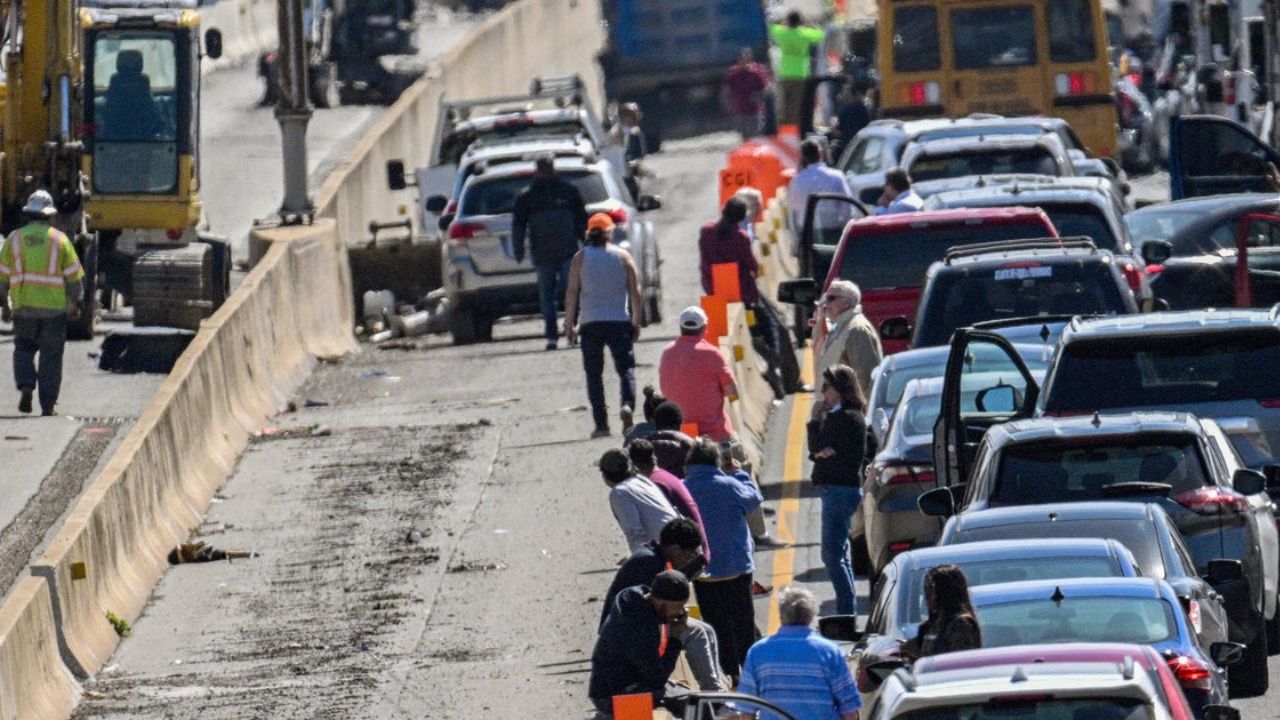
According to charging documents, Lea was driving more than 100 miles per hour when she struck another vehicle while traveling along the Baltimore Beltway.
Both vehicles then plowed into an active construction work zone, where multiple road workers were on site.
Six construction workers were killed instantly, making the crash one of the deadliest work zone incidents ever recorded in Maryland.
Investigators said the collision occurred as Lea moved across three lanes of traffic before striking the second vehicle.

Drugs Found in Driver’s System, Investigators Say
A report from the National Transportation Safety Board revealed that Lea had delta-9 THC in her system at the time of the crash, along with cyclobenzaprine, a muscle relaxant that can impair driving ability.
The final NTSB report found no evidence of a sudden medical emergency, contradicting earlier suggestions that Lea may have suffered a seizure or missed required medication.
Medical records failed to support claims that a health episode caused the crash, investigators concluded.
Second Driver Also Held Criminally Responsible
Court records showed that the driver of the second vehicle, Malachi Brown, was also speeding at the time of the crash.
Brown later pleaded guilty to negligent manslaughter and was sentenced to 18 months in prison. He was released early in June 2024 and ordered to serve the remainder of his sentence under home detention.

While both drivers were found to be acting dangerously, prosecutors said Lea’s extreme speed and impaired condition played a central role in the tragedy.
Families File Lawsuit Over Work Zone Conditions
In the aftermath of the crash, the family of one of the slain construction workers filed a civil lawsuit against:
- The state of Maryland
- A contracting company overseeing the work site
The lawsuit alleged that the work zone was not properly protected, citing inadequate safety measures alongside the reckless driving of Lea and Brown.
The suit argued that multiple failures combined to create a deadly situation that could have been prevented.
Crash Triggers Major Work Zone Safety Reforms
The tragedy prompted significant changes to Maryland’s work zone safety policies, according to state transportation officials.
The Maryland Department of Transportation State Highway Administration implemented new rules requiring:
- A protection vehicle to block the opening of all work zones
- Closure of an adjacent lane during active construction
These measures are designed to provide a physical buffer between traffic and road workers.
New Law Expands Enforcement and Penalties
The crash also led to the creation of Maryland’s Work Zone Safety Work Group, which helped draft the Maryland Road Worker Protection Act.
That law allows for:
- More speed cameras in work zones
- Higher fines for speeding and reckless driving near road workers
Read Also: Connecticut Mother Allegedly Had Adult Impersonate Murdered Daughter to Mislead State Caseworker
State officials said the goal is to deter dangerous driving and reduce fatalities in areas where workers are especially vulnerable.
Sentencing Brings Accountability, Not Closure
During sentencing, the court emphasized the scale of loss caused by the crash, noting that six families were permanently changed in a matter of seconds.
The 30-year sentence reflects both the severity of the conduct and the devastating impact on the victims’ families.
While the conviction brings legal accountability, families have said no sentence can truly make up for the lives lost.
A Lasting Impact on Maryland Roads
The I-695 crash has become a turning point for work zone safety in Maryland, frequently cited by lawmakers and transportation officials as a reminder of the consequences of speeding, impaired driving, and inadequate protections.
Officials continue to urge drivers to slow down in work zones, stressing that road workers’ lives depend on it.
Do you think tougher penalties and expanded speed camera use will actually change driver behavior in work zones? Share your thoughts in the comments below.