 by
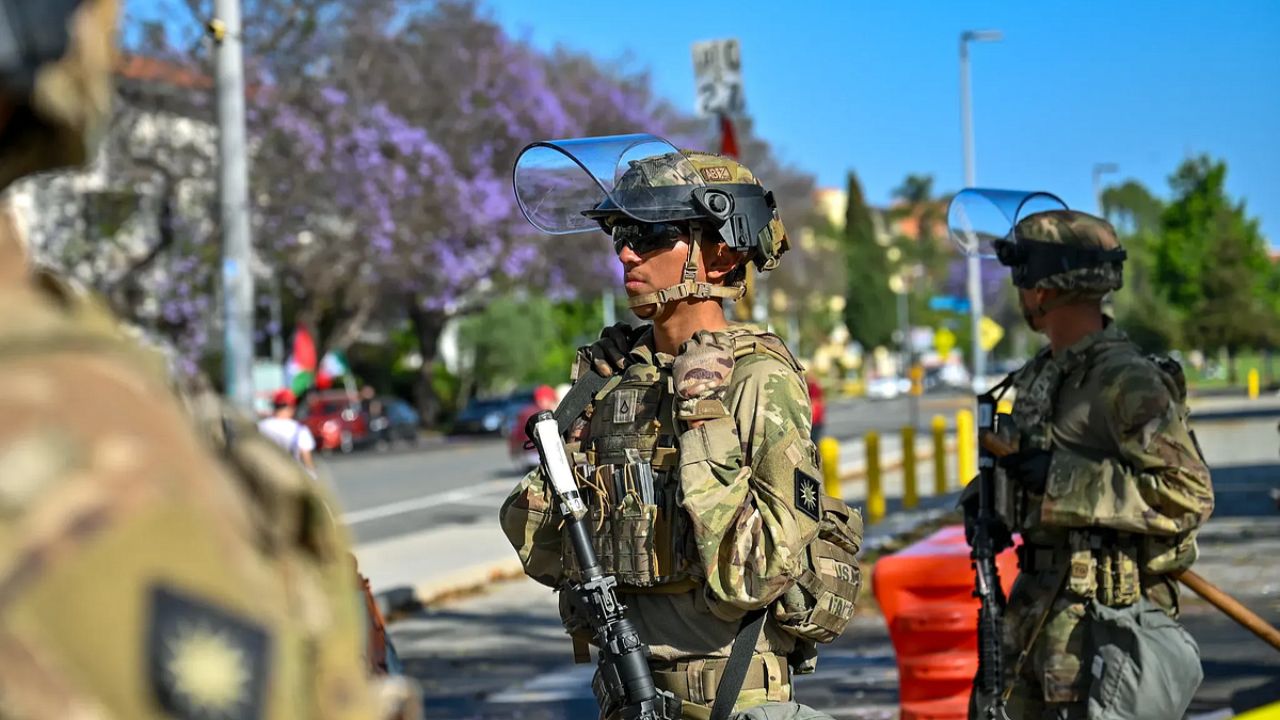
by San Francisco, CA – A federal judge has ruled that former President Donald Trump’s deployment of the National Guard and U.S. Marines in Los Angeles violated federal law, issuing a decision that could halt further military involvement in local law enforcement activities across California.
Violation of the Posse Comitatus Act
On Tuesday, U.S. District Judge Charles Breyer determined that Trump’s actions violated the Posse Comitatus Act, which prohibits the use of the U.S. military for domestic law enforcement without explicit authorization from Congress. The ruling stated that the president overstepped legal boundaries in ordering the military to participate in law enforcement activities during civil unrest in Los Angeles.
The 52-page opinion delayed enforcement of the injunction until September 12, allowing time for the Trump administration to file an appeal.

“Congress spoke clearly in 1878 when it passed the Posse Comitatus Act, prohibiting the use of the U.S. military to execute domestic law,” Breyer wrote in his ruling.
Scope of the Ruling and Legal Impact
Judge Breyer’s decision bars the federal government from using the military—including the National Guard—for any law enforcement roles such as crowd control, arrests, traffic checkpoints, riot response, or evidence collection.
Though the ruling does not require the withdrawal of the 300 National Guard troops currently deployed in Los Angeles through November, it mandates that their deployment must comply with the Posse Comitatus Act. Breyer clarified that the troops may still protect federal property, including government buildings.
Lawsuit Brought by California Officials
The lawsuit was filed by California Governor Gavin Newsom against Trump, Defense Secretary Pete Hegseth, and the Department of Defense. During the trial, evidence showed the use of armed soldiers, military vehicles, and visible military patrols in civilian neighborhoods—actions the judge said crossed legal boundaries.

“In short, Defendants violated the Posse Comitatus Act,” Breyer wrote, emphasizing that civilian law enforcement was fully capable of handling the June protests without military intervention.
Political Reactions to the Ruling
California Attorney General Rob Bonta praised the decision, calling it a victory for democracy.
“Today’s ruling affirms that President Trump is not King,” Bonta said. “He trampled on one of the basic foundations of our democracy by using military force as political theater.”
The White House, however, responded with criticism. Spokesperson Anna Kelly described the ruling as an overreach:
“Once again, a rogue judge is trying to usurp the authority of the Commander-in-Chief to protect American cities from violence and destruction.”
Legal Context and Broader Concerns
The Posse Comitatus Act allows Congress to authorize military involvement in domestic affairs under certain exceptions—such as suppressing rebellion or protecting federal property. In this case, Judge Breyer found that those exceptions did not apply, especially since no rebellion had occurred, and civil protests in Los Angeles had not overwhelmed local police capacity.
Breyer rejected the administration’s argument that only 300 troops remain, stating that they had been “improperly trained” in how to act within the limits of the law. He also cited public statements and executive orders from Trump suggesting an intention to violate the law elsewhere, including possible deployments in Chicago.
“I have the right to do anything I want to do. I’m the President of the United States,” Trump said in a statement quoted in the ruling. “If I think our country is in danger… I can do it.”
Judge Breyer, who was appointed by President Joe Biden, made clear that his ruling applies only within California.
What do you think about this ruling? Share your thoughts in the comments below. Civil liberties, executive power, and military involvement in U.S. cities continue to be pressing national issues.