
 by
by The T is slow-zone-free, but the MBTA’s spending is sky high. At least according to a new report on the MBTA, which found that — in the wake of the elimination of the authority’s cost control board — large retirement benefits, overtime pay, and high bus costs are running up expenditures at an “unsustainable rate.”
The
study conducted by the Pioneer Institute

, a Boston think tank, concluded that the MBTA’s costs are problematic during this “particularly tumultuous time in the Authority’s history.”
The transit authority’s operating costs have risen the fastest since 2021, the year the MBTA eliminated the Fiscal and Management Control Board, the report found. Costs rose nearly 15% between the fiscal years of 2023 and 2024.
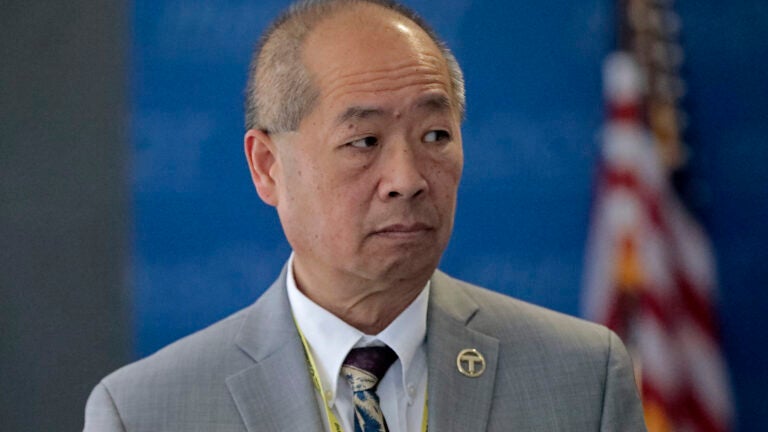
MBTA General Manager Phillip Eng, however, took issue with the report’s approach.
Eng called the report “disgusting” because it failed to acknowledge “the amount of work performed to repair the system.”

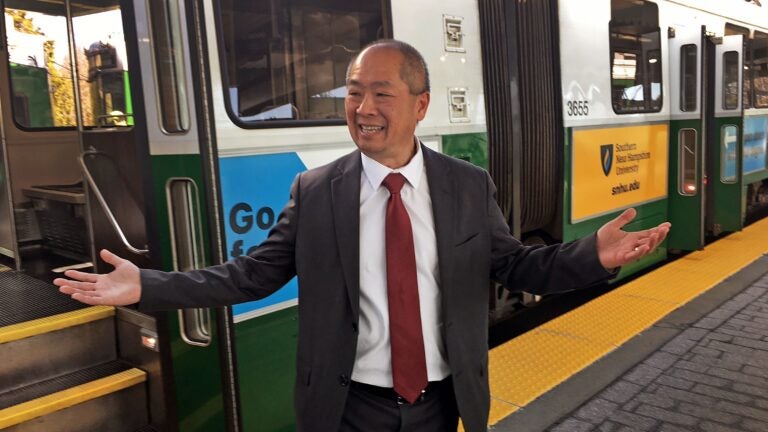
Eng told Boston.com he “doesn’t deny” the MBTA needs to make efforts to cut costs, but noted, “It would’ve taken 40 years to fix what we did — the $600 million we spent to do that work over the last year and a half, compared to the $2 billion estimated had we done it the old, traditional way.
“Right there is a cost saving that I would put up against any review that someone wants to do,” he said.
Gov. Maura Healey’s office also came to the T’s defense. “The MBTA has been underinvested in for decades, and our residents and economy have paid the price,” said Healey’s press secretary, Karissa Hand. “Because of Gov. Healey’s investments, we have faster and more reliable service, no slow zones, and a stronger workforce.”
Gov. Healey granted the MBTA an additional $535 million through a surplus budget package, without which the yearly deficit would have totaled $700 million. The surplus sets the predicted MBTA deficit for the 2026 fiscal year at $168 million, compared to a $307 million deficit for the 2025 fiscal year.
Still, the T could do more, according to the report.

-
As new T schedules kick in, 4 takeaways from Phil Eng’s extensive radio interview
-
Here’s how readers would grade Phillip Eng’s first year at the MBTA
“It isn’t possible to deliver public transportation cheaply, but every dollar of waste eliminated is one that can be invested in the regional economy by improving mobility in Greater Boston,” the report states.
“What really needs to happen is that the administration and the legislature need to make reasonable cost control a priority,” said Charles Chieppo, the author of the report, who says he has worked on “T issues for 25 years.”
Specifically, Chieppo said, his study found the MBTA needs to do two things in particular: recreate an entity in charge of controlling costs, and get a handle on the “essentially bankrupt” retirement fund.
“The data and experience suggest that expenses can be trimmed without harming safety or operations,” the report states.
But according to Eng, “It’s hard to really just look at one component” when “you need to look at things in totality and consider what it would be if there were no MBTA.”
A new control board
?
Since the elimination of the control board in 2021, “T costs have reverted to increasing at an alarming rate,” the study states.
“The Fiscal Management Control Board was the only entity really keeping an eye on costs,” said Chieppo.
The FMCB was effective at cutting costs, especially due to its three-year exemption from the
Pacheco Law
, which made it easier for the MBTA to outsource for certain services.
Under the exemption, the FMCB partnered with Brinks to address the lack of daily cash reconciliation. In doing so, cash reconciliation costs were cut by 65% and allowed the MBTA to track cash flow for the first time, the report says.
But that came at a cost, according to Eng.
“Decisions made by the previous control board, in terms of reductions in workforce and reductions in the investment, led to … the loss of knowledge and agency. We are digging out [of] what the previous control board recommended,” said Eng.
“State policy makers should restore the MBTA’s exemption from the law and use the FMCB’s experience with private contractors to more effectively target accountability and cost control,” the report states.
For the control board to be reinstated, per Chieppo’s recommendation, the state, not the MBTA, would have to make that decision, according to Eng.
Pension funds, overtime, and bus costs
The second largest area of expenditure is the MBTA pension fund, according to Chieppo. He predicts that the MBTA retirement fund will hit a “death spiral” within the next decade, if funding remains the same.
The Pioneer report states, “Between 2007 and 2025, the MBTA Retirement Fund went from 94 percent funded to 56 percent funded, even though annual MBTA contributions to the fund increased more than five-fold.” If the pension funding rate drops to 50%, there is concern that the pension fund will hit an irreparable point, said Chieppo.
Another contributor to high operating costs are the “more generous” benefits offered to T employees compared to state employees, according to the Pioneer report. Retired state employees receive 1.75% of their salary for each year of service compared to the T’s 2.46% rate.
The report also goes into detail about concerns over overtime pay, although, with 1,000 new employees on this horizon for the 2026 fiscal year, the amount of overtime hours and pay should decrease, according to the Pioneer report.
It also points to COVID-related budget cuts from which the T has yet to recover. “Pandemic-related ridership declines certainly aren’t the MBTA’s fault, but the resulting fare revenue declines only increase the importance of moderating the growth in operating costs going forward,” states the Pioneer report.
The report also cites the high costs of maintaining the MBTA’s bus fleet. The MBTA bus services have the highest vehicle maintenance operating costs of the top 25 leading US cities, according to a 2017 study conducted by Former State Inspector General Greg Sullivan.
MBTA administrators are not expected to be “bastions of managerial efficiency,” but “we are worse than our peers,” said Chieppo.
Still, argues Eng, “As we give the employees the right tools, the right equipment and ability to actually deliver, the return on investment from their efforts is essential to us continuing to deliver a world class system that the public needs, that the economy needs.”
Sign up for the Today newsletter
Get everything you need to know to start your day, delivered right to your inbox every morning.