
 by
by In March, the realities of immigration enforcement under the new Trump administration became apparent to many in Massachusetts when Tufts Ph.D. student Rümeysa Öztürk was
swarmed
by masked agents and sent to a detention center in Louisiana.

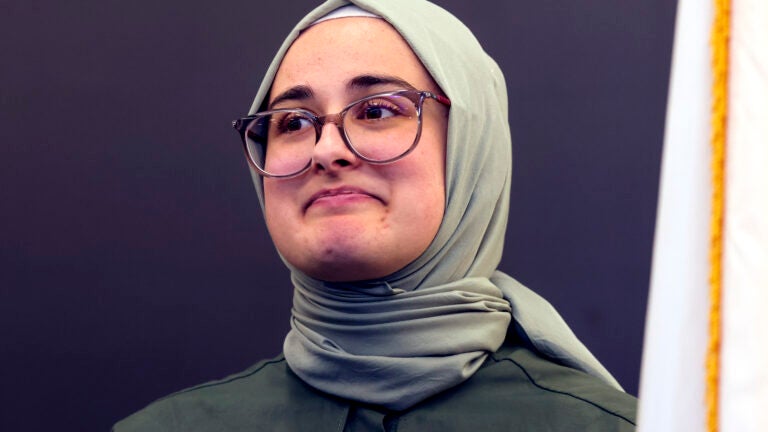
Öztürk is a Turkish national and Fulbright scholar who specializes in children’s media. Known on campus as a kind and introverted academic, Öztürk’s sudden detainment came as a surprise to her and those who know her. Her student visa was revoked, without her knowledge, and she was allegedly targeted because of a pro-Palestine op-ed she helped co-author in the Tufts student newspaper.
Outrage
quickly spread, and Öztürk was thrust into the national media spotlight as she arrived at a for-profit ICE detention center for immigrants at risk of deportation.
After more than six weeks, a judge

ordered
her to be released, and Öztürk made her way back to Massachusetts. She is returning to her studies at Tufts, even as the deportation proceedings against her continue in immigration court.
Öztürk gave relatively brief remarks to the media upon her release, but a
new
Vanity Fair
piece
published this week provides the most detailed look yet at what Öztürk experienced. In the piece, which Öztürk wrote, she describes both the harrowing circumstances of her time in Louisiana and the beauty that she found in meeting fellow detainees.

Here are three takeaways.
How the arrest unfolded
Those that followed the situation likely saw
video
online of Öztürk’s arrest, which occurred as she left her Somerville apartment to go break Ramadan fast with friends. Öztürk details how the day played out from her perspective in the
Vanity Fair
piece.
She spent that Tuesday in March working on her dissertation proposal, growing “exhausted and hungry.” On her way to the Tufts interfaith center, plainclothes agents whisked her into an unmarked vehicle.
“I was thrust into a nightmare,” she wrote.
She did not immediately know who had taken her or why. Frantic thoughts raced through Öztürk’s mind as she was shuttled from one location to another. What would her mother, who Öztürk was on the phone with when she was arrested, think? Why didn’t she call her grandparents and friends earlier that day? Would a library book she rented be returned? She began her “final prayers,” telling God that she had tried her best every day.
Next came a DNA test in Vermont, a severe asthma attack in Georgia, and a “cramped, cagelike” bus. About 24 hours after being arrested, Öztürk arrived at the detention center.
“The cramped room was filled with women, some lying on the cold floor, others looking scared or simply sad, all in desperate need of food and water,” she wrote.
After two sleepless nights with little food, she was processed and moved to a medical center for evaluation, then to a cell with 23 other women in it. They were kind, telling Öztürk how the center operated and what privileges the detainees had. They offered tea and cookies, taught her how to do laundry and how to store any meager belongings.
Medical issues
Öztürk and others faced numerous medical issues in the facility, she wrote. The asthma she had dealt with for years grew more severe than ever amid the detention center’s “damp, dusty, overcrowded conditions.” During one asthma attack, officers allegedly did not respond until women banged on the room’s windows to get their attention. Öztürk said that she was not allowed to get fresh air afterwards.
The women took care of each other. Öztürk describes how one fellow detainee had a severe allergic reaction and her eye became very red and itchy. She was not given the help she needed, Öztürk wrote, so Öztürk and others improvised by using black tea bags to try to reduce the swelling. Such improvisation was common, she wrote.
Medical requests would allegedly go unanswered for weeks. Sometimes people would be sent away from the medical center for “random reasons,” like a lack of a translator. Many women almost fainted in the hot sun as they waited in lines for medical attention, she wrote. Medical staff would recommend ibuprofen for a litany of ailments and sometimes raise their voices and berate detainees, according to Öztürk.
Women who showed up in relatively good health witnessed their physical and mental health deteriorate “due to inadequate access to medical care, nutritious food, sleep, sunlight, and fresh air,” Öztürk wrote. The “overwhelming stress” caused detainees to lose their hair and stop menstruating.
Bonding
In the piece, Öztürk describes how she grew close with the other women she interacted with. Women from Africa shared their favorite recipes and promised to cook for her in the future. “Aunts” from Russia greeted her warmly with kisses on the cheek. They shared their experiences escaping war and persecution, going without food and water and losing friends at sea only to wind up in an American detention center. An Armenian woman told Öztürk to write about them upon her release. A practicing Catholic said that God could not hear her prayers in the detention center, but prayed anyway.
“I found myself immersed daily in the love, beauty, resilience, and compassion of these women,” Öztürk wrote.
They adapted, transforming their cell into “a therapy space, a beauty salon, a hairstyling center, a Pilates studio, a medical center, a massage room, an interfaith temple, and an art studio all at once.” They discussed humorous news and matters of serious geopolitical importance. They spoke about their children.
Öztürk found hope and camaraderie in her fellow detainees but also saw the toll that their detention was taking on them. An artist she met lost all inspiration, a musician said that she would not be able to play her instrument again.
“Many of us could not hear the words and music inside of us. All of us were losing hope and parts of who we are, both as humans and professionals,” Öztürk wrote.
At one point, Öztürk gained access to “the saddest and smallest library” she had ever seen. In one book, she found handwritten notes written by various detainees over time. They were filled with “reminders of hope, strength, and the assurance that this, too, shall pass.” Finding the notes caused Öztürk to cry, something that the other detainees told her was a normal and regular response to life in the detention center.
Now Öztürk is free, but many of those she met in Louisiana likely are not.
“My true freedom is interlinked with the freedom of many women I lived alongside in ICE prison,” she wrote.
Öztürk is still sorting through the complicated emotions that arose from her detainment.
“I faced numerous hardships. Yet, unlike what the media would lead us to believe, none of that pain came from the immigrant women around me. Instead, I survived thanks to their kindness, care, and compassion,” she wrote. “How is it possible to feel both unlucky and fortunate at the same time? How can suffering and compassion coexist in the same environment?”
Ross Cristantiello, a general assignment news reporter for Boston.com since 2022, covers local politics, crime, the environment, and more.
Sign up for the Today newsletter
Get everything you need to know to start your day, delivered right to your inbox every morning.